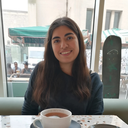
Sara is a primary education university student who completed her European Solidarity Corps placement with Associazione Antigóna, one of WellSpaces' leading organisations, volunteering at a kindergarten in Kraków, Poland. In her article, she reflects on the ups and downs of her time abroad — the language barrier, the winter, and the people who turned a new city into home.
The warmest winter of my life
My European Solidarity Corps journey started with an Instagram post. It was the beginning of 2025 and my mom had just shared a post about an E.S.C. project in a Finnish kindergarten. She had sent it to me because of a craving I had always had: working in an international environment.
I must admit, my initial motivation to join a volunteering project was a bit selfish and far from what the E.S.C. is supposed to be built on. When I started looking for this kind of experience, in fact, my main objective was to see whether I could work as a teacher abroad and even though I achieved my initial goal of “testing the waters”, I discovered so much more through this experience, both about what it means to be European and about myself as a person.
But first, let’s take a step back. The place I ended up in for my E.S.C. was Kraków, Poland, where I volunteered at Governmental Kindergarten No. 83 thanks to the guidance and support of IB Polska, which was, what we call in jargon, my “coordinating organization”. And even though I was welcomed by the toughest winter I have ever experienced, I also lived through some of the warmest months of my life.
As my pre-departure training with my “sending organization” Antigóna had prepared me for, I went through the whole E.S.C. curve. First came the honeymoon phase: new city, new people, new activities, new environment… everything looked new and exciting, but eventually, the rose-tinted glasses came off.
The language barrier turned out to be a much bigger bump in the road than I had expected. Even though the staff, the children and I all tried our best to communicate in ingenious ways, the lack of a common language made things really difficult at times. The winter was also not exactly generous to me, either, and I ended up getting sick twice.
However, this phase eventually came to an end. What had initially felt like low points gradually became part of my everyday life and, somehow, I learnt to give them a positive spin. Struggling to communicate became a motivation to learn Polish, while the moments of sickness taught me to slow down and take breaks when I needed them.
From this first part, it could seem as if everything that happened was simply a matter of simple character development. But, as you might imagine, this volunteering experience was a two-way street. As much as this experience served me, it also served the children at the school, as it was a small way for Poland (a country that is not particularly diverse demographically, even though this is increasingly changing) to open its doors to diversity. Apart from two children of Ukrainian origin and one whose father comes from India, the class I volunteered in was made up entirely of Polish children.
Therefore, my presence in the classroom offered them the opportunity to open their everyday lives to a more diverse world (a new culture, a new language, a new way of doing things) and it helped me feel more connected to the idea of European citizenship. Living in Poland allowed me to better understand how cooperation can emerge despite differences and it taught me how European projects can create mutual understanding and shared value across countries.
Above all, my experience underlined the importance of intercultural dialogue. The activities at school were never a one-way process, because the interaction with the pupils and staff was always continuous. We were constantly learning from one another and developing greater openness towards different cultures.
Finally, there were the people I met.
My flatmates, with whom I turned a simple house into a home. Four strangers who quickly became some of my closest friends, people I could talk to at any time, about anything. As the saying goes, home is where the heart is and now it feels like my heart will be scattered across Europe.
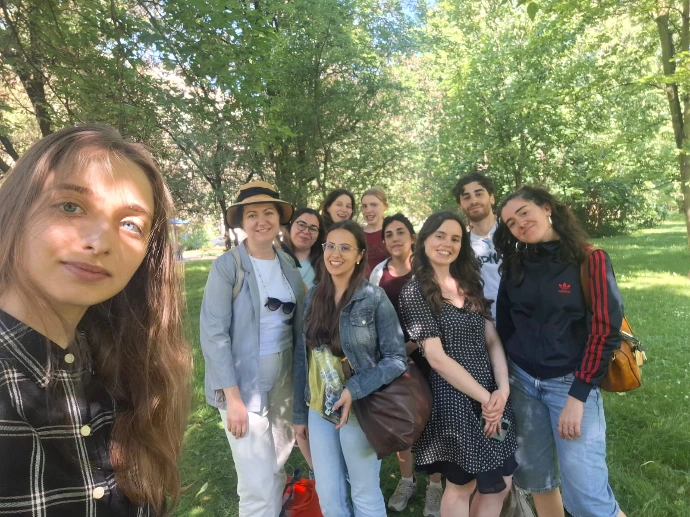
Secondly, the other volunteers. What started as relationships between people who simply happened to be in the same place at the same time gradually turned into genuine friendships. Some were the people I saw every day at school, others were my companions for evenings at bars and clubs and others were the friends I shared hot chocolates with while trying to survive the colder months.
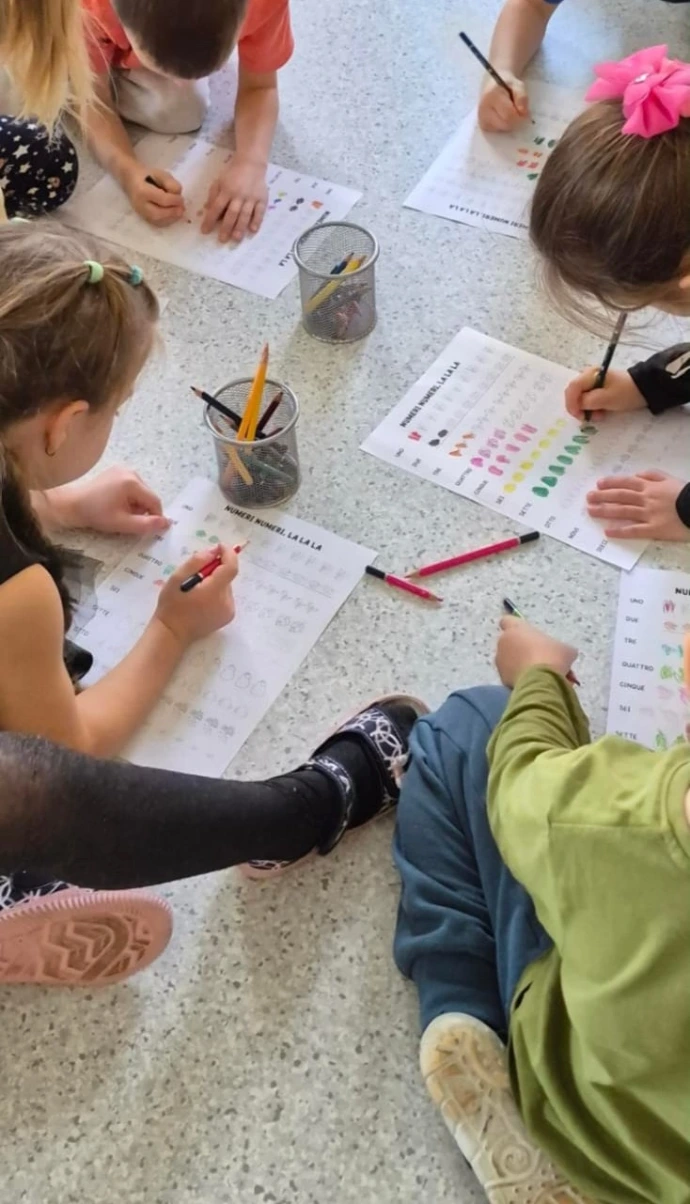
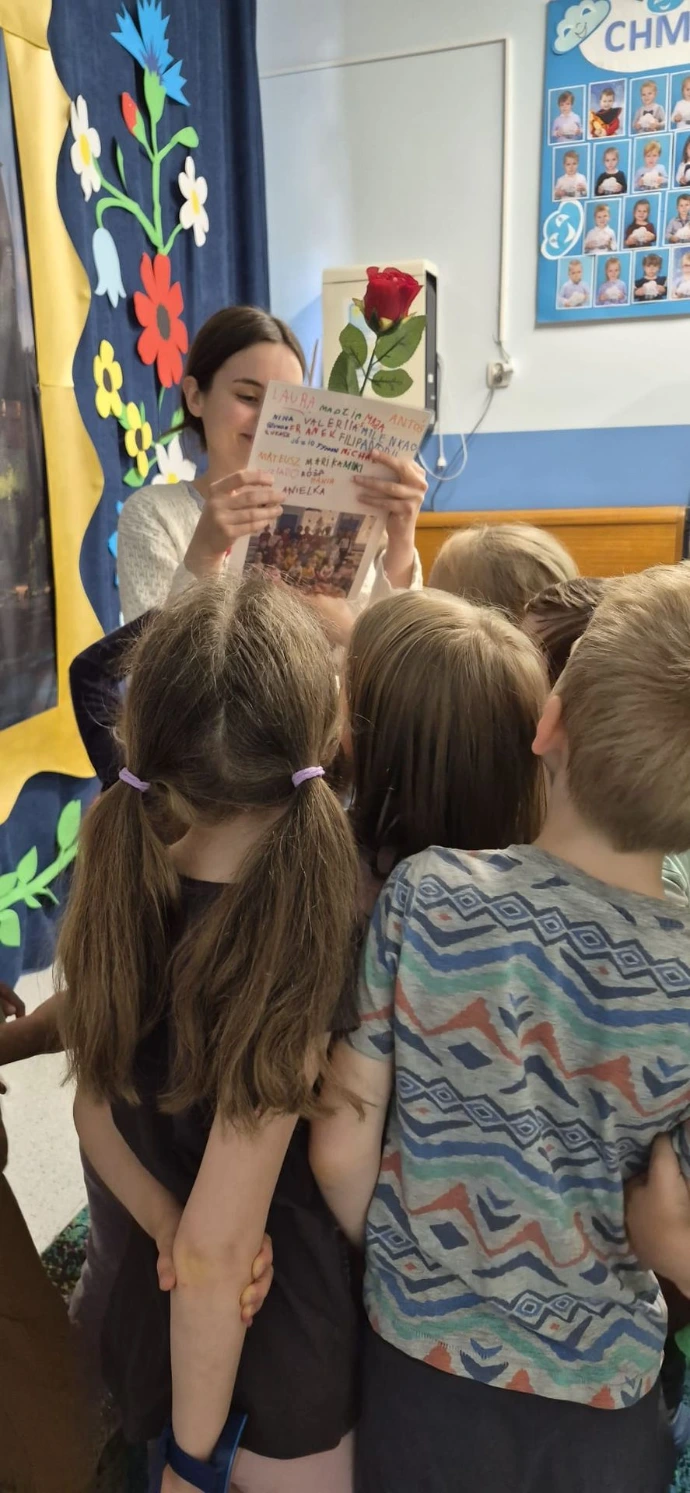
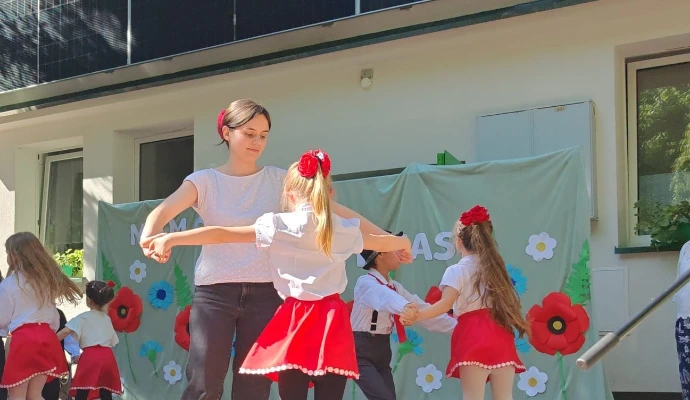
And thirdly, the students and staff at the kindergarten: even if it took me some time, I eventually found my place there too, somewhere between Italian and English lessons, preparing decorations and rehearsing for shows.
So… thank you, mom, for that life-changing Instagram post.
Read more about Sara
Sara Bastardi is currently completing her degree in Primary and Early Childhood Education at the University of Modena and Reggio Emilia.
After several years of experience working as a teacher in Italian schools, she decided to embark on a new journey by joining the European Solidarity Corps in Poland. She volunteered at a public kindergarten in Kraków, where she supported teachers in their day-to-day activities and conducted Italian and English language lessons to the children.
Upon returning to Italy, Sara chose to remain involved in the world of European volunteering by joining Antigóna, seeing it as a meaningful opportunity to build on her previous experience and continue contributing to international youth initiatives. She keeps being involved in the framework of European Solidarity Corps, where she follows the full procedures concerning the relationships with Italian volunteers and foreign partners.