Wellbeing is not an add-on.
It is the foundation.
WellSpaces is a European network of youth organisations and youth practitioners building the inner conditions — safety, belonging, hope — that let young people act with genuine agency in their communities.
What conditions are necessary for wise agency, and who has the power to create them?
Our role is to connect, amplify, and resource the people who hold it.
We believe the power to create these conditions is distributed across the youth sector — held by educators, artists, practitioners, researchers, and youth workers in communities every day.
The WellSpaces Network for Youth is a pan-European network of member organisations working to build the conditions that enable young people to act with wise agency in their communities. We started with 25 founding members. Today, we engage member organisations across 17 countries and are recognised by the European Union as a long-term player in European youth policy.
Relational practice is being developed in communities across Europe, but remains siloed by language, funding systems, and national policy. Youth work is fragmented and undersourced. Practitioners are developing powerful relational and embodied approaches in real communities, but this wisdom rarely crosses borders. Even more rarely does it reach policymakers or funding structures. Meanwhile, young people navigate intersecting pressures — mental health challenges, ecological anxiety, digital stress, disconnection — within systems not designed to support their wellbeing or wise agency. Only operating at European scale enables the cross-cultural synthesis and EU-level influence that can shift the sector.
Wellbeing is not an add-on to a programme. It is the foundation on which meaningful participation is built.
Safety → Belonging → Hope → Wise Agency
This is not a checklist, and it is not a rigid pipeline. The four conditions are interwoven in practice—practitioners hold them simultaneously, in shifting proportion, responding to what the moment asks. Yet they carry a directional logic: safety creates the ground from which belonging can emerge; belonging opens the space for hope; and hope makes wise agency possible.
From the inside out. From the grassroots up.
We don't generate knowledge from outside. We work inside practice. We create spaces where presence is the methodology. We document what shifts. We translate it into forms that travel — not just to other practitioners, but to policymakers and sector infrastructure.
Member organisations sign a Memorandum of Understanding committing to the framework: Safety, Belonging, Hope, and Wise Agency. Through participatory sense-making and narrative inquiry, we gather evidence from their practice and synthesize across borders. Young people are partners in this inquiry — their lived experience shapes the evidence we gather and the frameworks we build. This feeds three parallel streams of influence:
- Field-building: Training, toolkits, frameworks that help practitioners embed wise agency in their work.
- Policy influence: Policy briefs and evidence that inform how funding bodies, national governments, and EU frameworks think about youth wellbeing.
- Collective voice: Member organisations speaking together for structural change — funding models, staffing ratios, policy priorities that make relational work possible.
A European youth sector where wise agency — grounded in safety, belonging, and the relational skills to act — is embedded in practice, policy, and infrastructure — so that young people have both the inner conditions and the structural conditions to act with genuine agency in their communities. We pursue this knowing that relational work alone cannot transform unjust systems, but that systems transformation without relational grounding fails to reach young people's lives.
Meet the team
The people who hold the direction -and tend the space for you to shape it.
WellSpaces is held together by people before it is held together by structure. The coordination team brings together practitioners, trainers, and facilitators from across the network — each rooted in their own field context, each committed to the shared direction.
We don't operate from a central office. We operate from a web of relationships, shaped by the same values we carry into the room with young people: presence, honesty, and the willingness to be moved, to think together, and to listen into what wants to emerge.
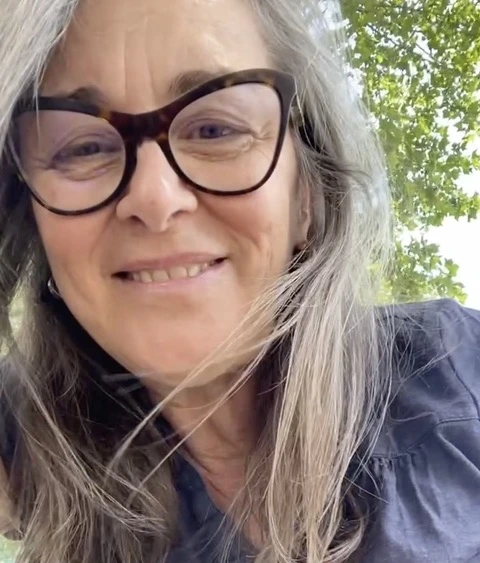
Paola Bortini
Paola is an Italian coach and trainer based in Vienna (Austria), mother of 2 young men. With a background in sociology and youth work, Paola combines Mindfulness and self-compassion based approaches with embodiment. Paola is active at world-level, involved in projects to support embodied leadership and emotional resilience.
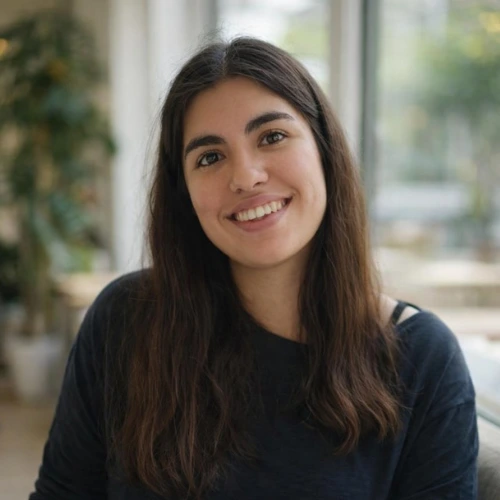
Luna Villalba
Luna Villalba is an Italian-Argentinian social psychologist who specialises in interculturality. Having a degree in Languages and Intercultural Studies at the University of Florence, followed by training at National Taiwan Normal University, she now applies her insights within multilingual, international contexts. Her professional experience includes working with global organisations such as Airbnb and Zara, as well as providing consultancy and storytelling services. Her work is informed by her lived experience in Argentina, Italy, Spain, Taiwan and Indonesia.
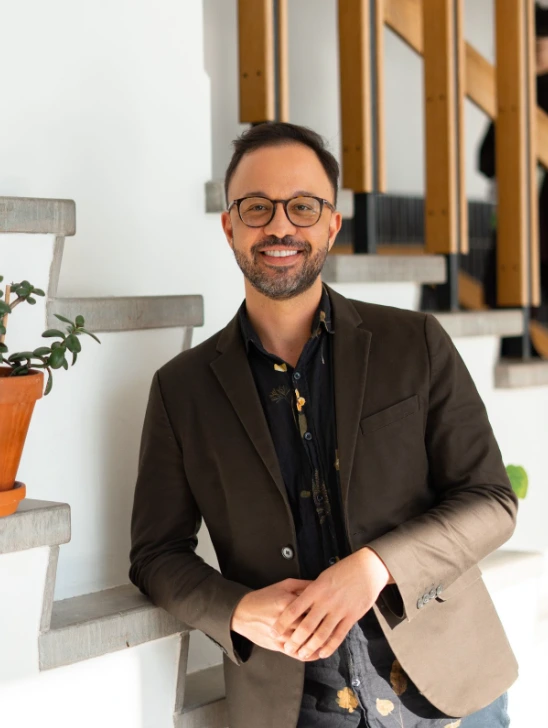
Ricardo Dutra
Ricardo Dutra is a social designer, researcher and educator working and collaborating in diverse global contexts. He holds a MFA in Transdisciplinary Design from Parsons School of Design, New York, and a PhD in Design for Transformative Education from Monash University, Melbourne. Ricardo is currently a Lecturer at the Department of Art & Media, Aalto University, Finland. Ricardo’s work has been featured by Fast Company, Milan Design Week, the Unreasonable Group, Ashoka, The New School, and the UNAOC.
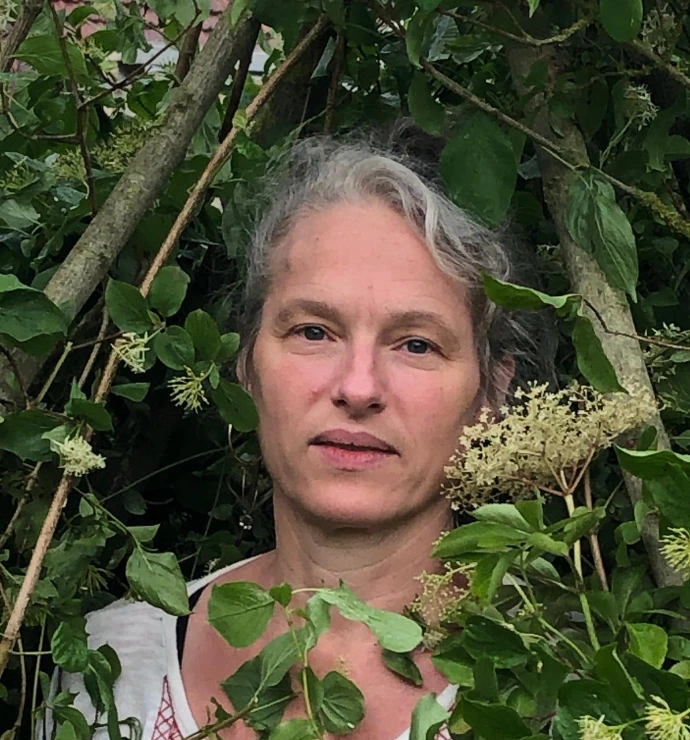
Agathe Peltereau-Villeneuve
I am engaged in bringing art-based and awareness-based change methods to individuals, teams and systems in support of their flourishing and regeneration. Based in France, I collaborate with many like-hearted collectives and individuals around the world. My core missions in 2026-2027 are to teach and promote Social Presencing Theater regionally, and support the development of Social Arts in Europe in collaboration with the Presencing Institute.
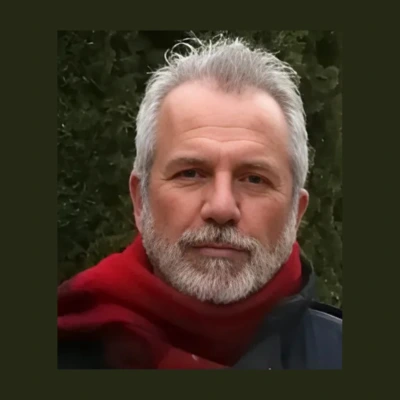
Paolo Stollagli
Founder and President of Antigóna, driving international cooperation initiatives Globally. He spearheads the organization’s European Solidarity Corps (ESC) operations, serving as the primary liaison for volunteer candidates and foreign partners while overseeing selection, training, and international monitoring through field visits that strengthen community bonds.
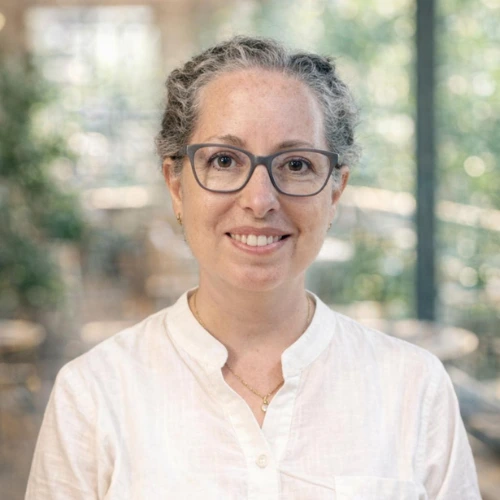
Marina Seghetti
Marina works at the intersection of capacity building, social art, and outreach. She designs creative spaces that foster collaboration and positive change. As a consultant, trainer, and coach, she guides individuals and organizations in realizing their transformative potential. With expertise in education, psychology, and fine arts, Marina brings a unique perspective on human development and group dynamics. She has worked with organizations like the UNDP, InterAction Council, and CPMRC Argentinian Congress, and co-founded U.Lab Hub Firenze, a space for innovative ecosystems.
Members
27 organizations. 17 countries. A shared direction.
WellSpaces is a coalition of youth organizations, informal groups, and individual practitioners committed to making wellbeing a structural feature of youth work — across Europe and beyond. Our members are the network — implementing activities locally, generating grassroots evidence, and bringing the WellSpaces approach to life in their territories.
Leading organisations

Associazione Antigóna
was founded in Italy in 2008 with a simple and generous conviction: that the best contribution an organisation can make is to strengthen the work of others. Over fifteen years, that spirit has grown into direct project leadership, digital inclusion work, and a sustained commitment to European solidarity programmes.

Studio Atelierista
is a transdisciplinary residency program, dedicated to activating awareness-based collective creativity through social arts and embodied practices. It creates experimental spaces—rooted in Social Presencing Theater and Awareness-Based Design—where artists, educators and researchers make the intangible visible, exploring pedagogies of togetherness and relational creativity across formal and informal learning contexts.

Limina
Limina is a Vienna-based initiative with over 20 years' experience delivering training and facilitation services internationally, using mindfulness-based approaches. Through workshops and cooperation projects, it creates transformative spaces where individuals and groups can develop new perspectives and strengthen their capacity for dialogue within complex organisations and communities.
Génération Présence
Génération Présence is a Paris-based NGO (est. 2011) working at the intersection of Social Presencing Theater, Theory U, and Social Arts across educational, organizational, and change-making contexts. Their practice centers on deep sensing, collective reflection, and relational learning, co-designing programs and residencies to cultivate collective awareness, agency, and systemic change.

Belgium

Estonia

France

Hungary


Latvia

Malta
Norway

Ingvild Øverland

Portugal
Romania


Spain



Co-funding & Sustainability
Independent. Responsible. Built for the long term.
WellSpaces is supported through the Erasmus+ Civil Society Cooperation – Youth Operational Grant (ERASMUS-YOUTH-2025-CSC-OG-FPA, n. 101257067 / SGA n. 101313838) — reflecting the European Union's recognition of wellbeing-centered youth work as a long-term policy priority.
This operational grant model enables WellSpaces to build infrastructure: shared standards, a growing evidence base, and a connected community of practice across 17 countries. As the network grows, so does its capacity to sustain and expand the work.
Co-funded by the European Union. The contents are the sole responsibility of the authors and do not necessarily reflect the position of the European Union.