Janette Dessì is an Italian-Cuban graduate who completed her European Solidarity Corps experience with Caritas in Sofia, Bulgaria, through Associazione Antigóna, one of the leading organisations of WellSpaces Network. During her placement, she supported activities with children in refugee centres. In her article, she reflects on the stories of the children she met, the inequalities shaping their lives, and how her experience deepened her understanding of solidarity and privilege among others.
Remember me: stories of childhood, resilience and hope
I have always believed there is no finer purpose in life than helping others. From a young age, I never pictured myself as solitary or self-absorbed, confined solely to my own ideas and worldview. On the contrary, I have always felt part of a community defined by diversity, richness, and altruism. That is how I always wanted to live: alongside others, especially those in vulnerable situations.
The story of how I joined the European Solidarity Corps begins right there.
In the early 2000s, my mother arrived in Italy after leaving everything behind—home, family, loved ones, and the security of the familiar—with the goal of laying the foundations for a new life in a country that could offer greater opportunities for growth to both her and my older sister. My sister had stayed behind in Cuba but would eventually reunite with us a few years later, after I was born.
My mother’s life in Italy was far from easy. She faced language barriers, difficulties finding work, homesickness, and an atmosphere of racism and xenophobia that she frequently had to contend with. Yet there was one moment during the week when I saw her smile spontaneously and truly enjoy herself: the Italian classes for foreigners organized by a volunteer association.
In that small but welcoming classroom, located inside a rather drab building, the laughter of women eager to learn and take charge of their lives would ring out. I was just five years old and used to accompany my mother to class. I would watch the teacher and observe the grace, patience, and empathy with which she dedicated her skills to her students.
That image stayed with me for a long time.
Years later, now an adult living in a big city to pursue my university studies, I finally had the opportunity to repay—at least in part—the kindness those volunteers had shown my mother. I became a volunteer myself at an Italian language school for migrants. That was when I realized just how much that experience resonated with me. Seeing my students’ progress—and watching their satisfaction and, above all, their self-esteem grow with every lesson—made me realize that volunteering would remain a part of my life from then on.
And that is how I discovered the ESC.
I was nearing the end of my bachelor’s degree in International and Diplomatic Sciences and felt the need to take a short break before starting my master’s. Partly because, to be honest, I didn’t yet know what I wanted to study or where. So, I began looking for a volunteer program. To my surprise, the search took much less time than expected: within a few weeks, I found a sending organization and a project focused on migration. I would have the opportunity to organize activities for minors at various refugee centers in Sofia, Bulgaria.
I knew very little about Bulgaria. Just a few facts about the 20th-century Balkan wars learned in school, nothing more. I was unfamiliar with the country’s language, culture, and customs. I didn’t know where I would be living, or with whom.
I knew only that the desire to be of help to people in need was stronger than my fear and doubts.
And so, in October 2025, with a suitcase packed with the warmest clothes I owned—having been duly warned about the snow and cold I might face during the winter—I set off on this new adventure.
I could recount hundreds of episodes from my seven months in Bulgaria. The truth is, many of them are neither amusing nor happy. The organization of the project, especially in the early months and up until the coordinator resigned, was at times deeply problematic.
But I do not want those difficulties to define my experience.
I prefer to use these lines to tell the stories of the people I met and, above all, to give a voice to those who are too often reduced to a number, a statistic, or a political problem.
“A.” was about ten years old and came from Syria. He was one of the youngest children in the center and the only one his age unaccompanied by his family. He had arrived in Bulgaria alone, relying on smugglers and traveling first through his own country and then through Turkey along extremely dangerous migration routes. “A.” was hyperactive and full of energy. Whenever he saw us pass through the gate of that gray, impersonal facility where he was forced to wait for his documents to arrive, he would run toward us and hug us.
He kept asking us to teach him German.
He had only one dream: to join his father in Germany.
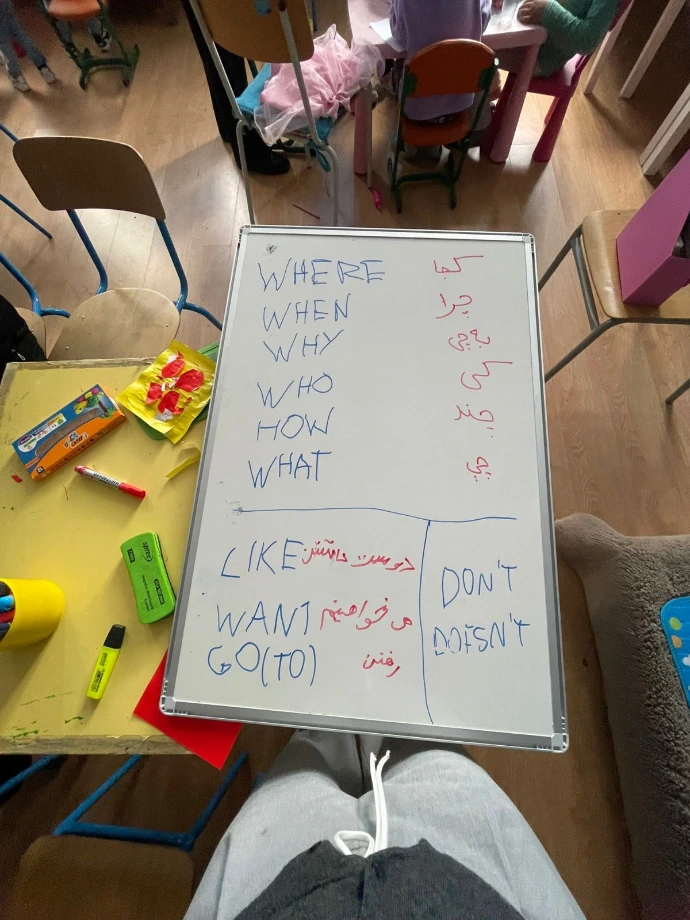
“T.” was thirteen years old. Shy and reserved, he too came from Syria and had arrived in Bulgaria alone, following the path of his family, who were living in Austria at the time. For months, he watched us in near silence. Then, one day, he finally found the courage to approach and speak to us. Using the little English he knew and the little Arabic we knew, simple yet hopeful conversations began to take shape.
Where are you from? What is your favorite color? And your favorite food? Where would you like to travel one day? What do you want to be when you grow up?
Ordinary questions. The same ones we might ask any boy his age. And perhaps that was the most important thing of all: remembering that, behind the word “refugee,” there was simply a child with curiosity, fears, and dreams.
“T.” dreams of visiting Italy. And, one day, becoming a dentist.
“C.” is a twelve-year-old Roma girl living in Fakulteta, one of Sofia’s most disadvantaged neighborhoods, where access to electricity, running water, and adequate sanitation cannot be taken for granted by many families.
She is the eldest of six siblings and, despite her young age, shoulders responsibilities that no child should have to bear. She looks after the younger ones almost like a second mother, often putting her own childhood aside.
While other children play, she sweeps the floor. While they draw, she comes over and offers to help us clean up or prepare lunch. When we go to the playground, instead of running to the swings, she stays seated on a bench, keeping a watchful eye on the little ones. Only when we insist that she join the others does she—little by little—allow herself the right to simply be a child.
At twelve, school plays only a marginal role in her life, and family and social expectations seem to be steering her prematurely toward marriage and adulthood. She cannot yet read or write, but she enjoys math.
One day, I asked her: “Where do you see yourself in a few years?” She replied that she would like to be a hairdresser.
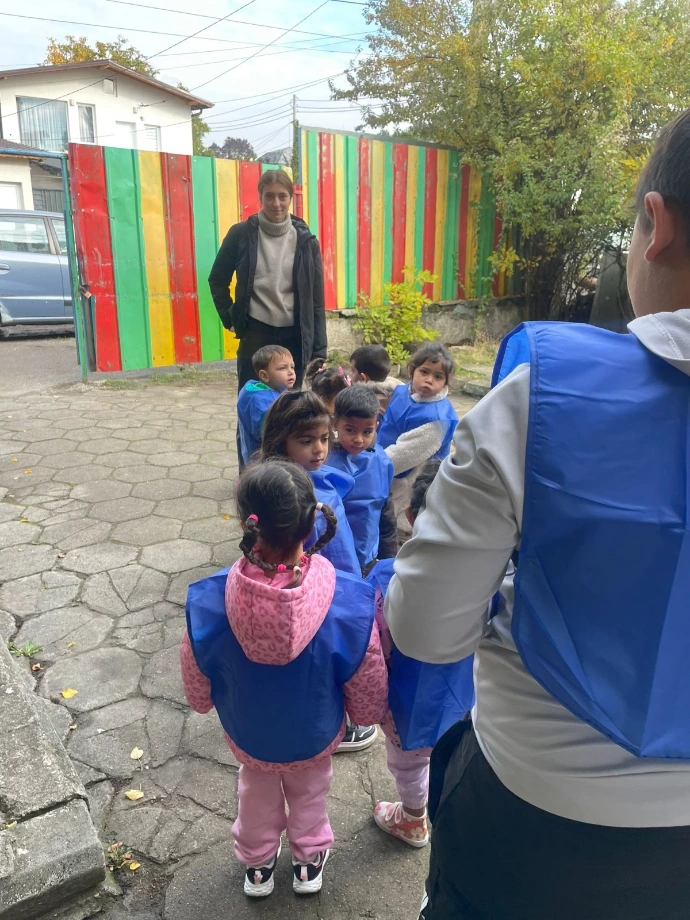
I shared some of the most important and formative months of my life with these children.
At first, I sensed a certain wariness toward us. Perhaps it was the fear of being viewed once again solely through the lens of their condition, or the fear of growing attached to people who were destined, sooner or later, to leave. As the months went by, however, that distance slowly turned into trust. Then into affection. And that is precisely what made my return to Italy so difficult.
But, painful as it was to part ways with them, there is one thing I do not want to forget: the immense privilege that I had.
I had chosen to be there.
I had chosen to share a part of their daily lives for a few months, knowing that, in the end, I could board a plane and return to the safety and comfort of my own home. They, on the other hand, would remain there. Living with loneliness, with forced separation from loved ones, with uncertainty about the future, with a lack of opportunities, and with living conditions that no child should ever be forced to regard as normal.
Perhaps this realization is what has stayed with me most deeply from my experience in Bulgaria.
My ESC volunteering experience has come to an end, but I do not believe that the sense of responsibility I feel toward the people I met has ended with it. I was fortunate enough to get to know them, to listen to their stories, and to be welcomed into their lives. Now that I can share these stories, I feel a duty to ensure they are not forgotten. Using one’s voice does not mean speaking on behalf of those who already have a voice; rather, it means helping to create spaces where that voice can be heard.
After all, protecting the most vulnerable does not mean viewing them as weak. On the contrary, the children I met taught me exactly the opposite. I saw in them a strength, a capacity to endure and to keep imagining the future, that often seemed greater than my own. Yet, the fact that they are strong does not mean they should have to be strong out of necessity. No child should be forced to grow up too soon, or to live with fear, loneliness, or a lack of opportunity.
Solidarity, then, means ensuring that the strength of these children no longer serves merely for survival, but can finally be used to grow, to make choices, and to dream.
And perhaps this is precisely the most important task we have as a community: to build a world where no child has to prove how strong they are simply because we adults failed to protect them adequately.
I dedicate this article, and all my future achievements, to the children of Fakulteta, Ovcha Kupel, and Voenna Rampa, with the promise to always strive to make the world a better place and ensure that your suffering is never repeated.
Read more about Janette Dessì
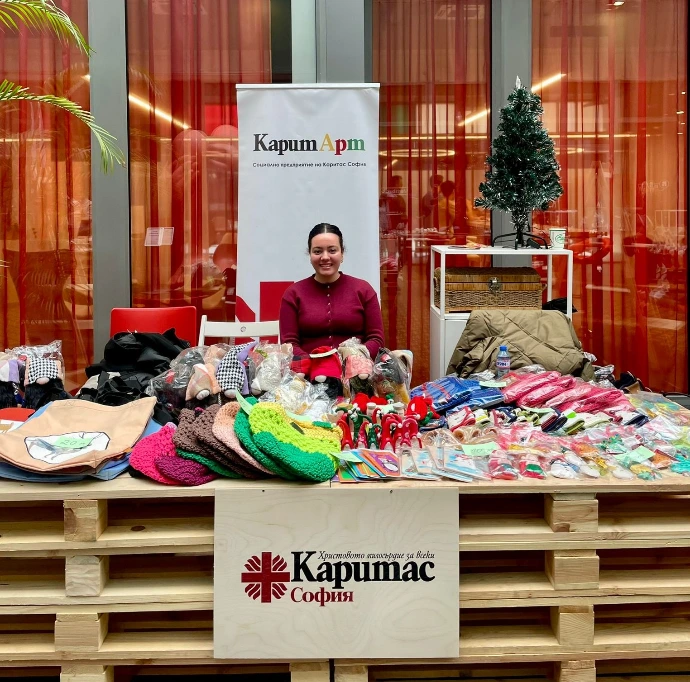
Janette Dessì is a 23-year-old Italian-Cuban graduate with a degree in International Relations from the University of Genoa, Italy. She wrote a thesis titled “Migration as Economic Imperialism,” which examined the impact of remittances and migration policymaking on the development of the Global South.
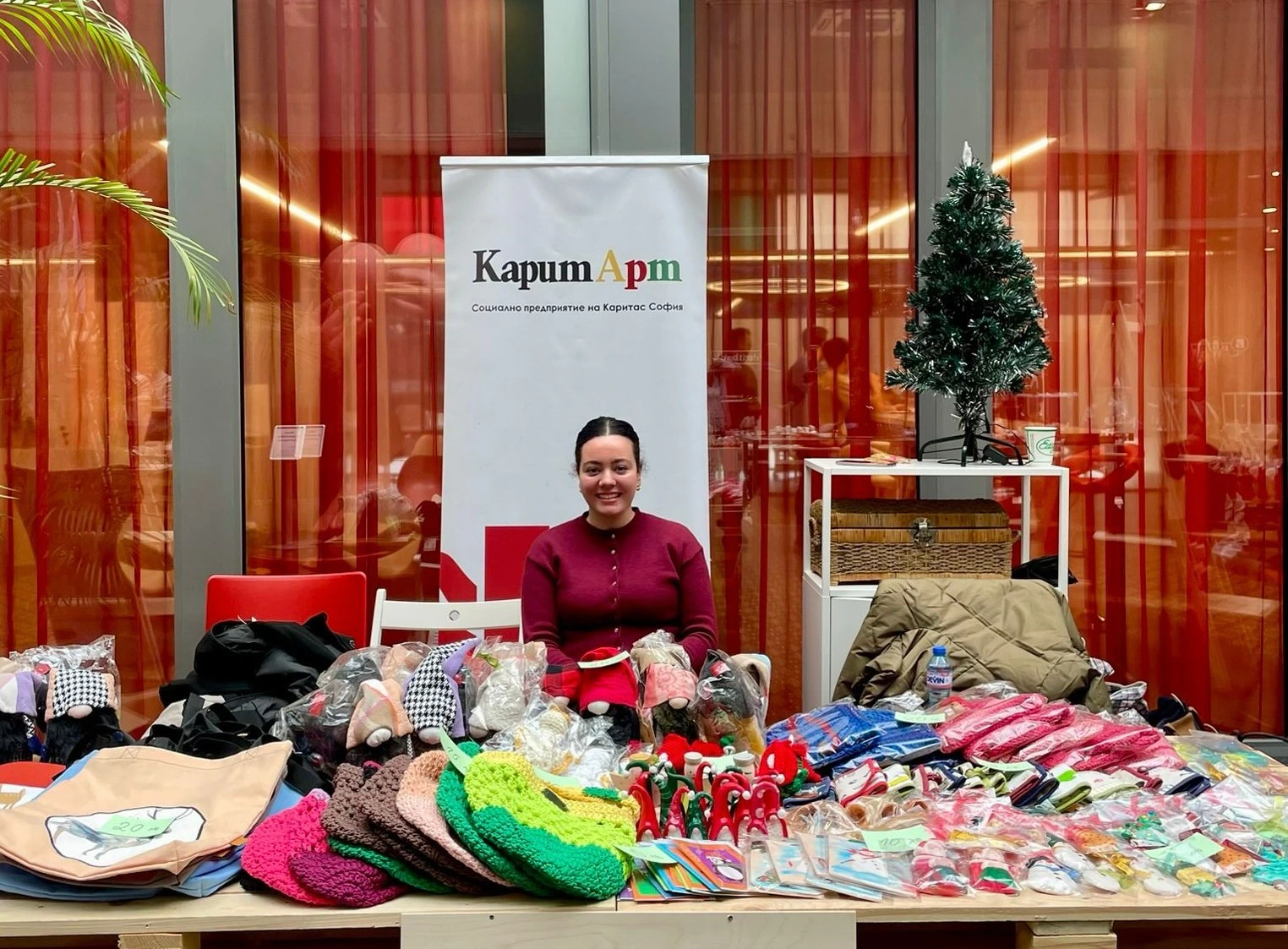
This year, she completed her European Solidarity Corps (E.S.C.) experience in Sofia, Bulgaria, where she volunteered with the Caritas.
However, before her E.S.C. experience, Janette had gained extensive volunteering experience in the fields of migration, social inclusion, and humanitarian assistance. From 2022 to 2023, she taught Italian to refugees at Circolo Operaio Sampierdarena in Genoa. Since 2025, she has volunteered with Ginestra ODV, supporting humanitarian initiatives related to Ukraine, and worked as a Social Media Manager for Semiforesti, an organisation promoting refugee integration through language courses and community activities.
Moreover, in 2024, Janette completed a civil service program at the Italian Ministry of Justice, focusing on the social reintegration of former inmates and individuals convicted of minor offences.
Outside her academic studies, Janette writes articles on political developments in Africa and the MENA region and regularly participates in Model United Nations conferences across Europe.